Full Stack or Full-Stack: What Is the Difference & Which Is Correct?

Introduction English learners often wonder whether full stack or full-stack is the correct form. Both versions are common in technology, especially when people talk about web development, software engineering, and developers who work across different ...
Read more
Tuesdays or Tuesday’s: Which Is Correct?

English learners often become confused when they see tuesdays or tuesday’s because the words look almost identical. However, the apostrophe in Tuesday’s changes its grammatical function completely. One form is usually a plural noun, while ...
Read more
Friends and Family or Family and Friends: Which Is Correct?

English learners often wonder whether friends and family or family and friends is the better expression. Both versions are grammatically correct, and both describe the people who are close to someone. The main difference is ...
Read more
country’s or countries: Which Is Correct?
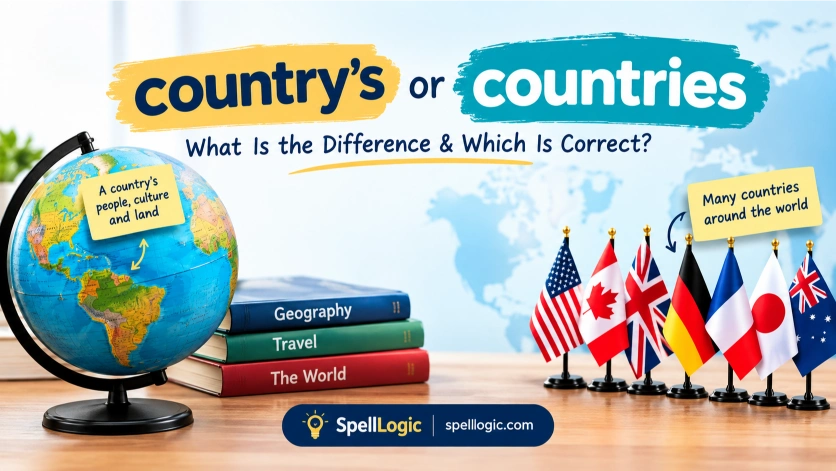
English learners often become confused when they see apostrophes in words such as country’s and countries. Although these forms look similar, they have different meanings and grammatical functions. Understanding country’s or countries is important because ...
Read more
In a Call or on a Call: Which Is Correct?

English learners often wonder whether in a call or on a call is the correct expression. Both phrases are connected with telephone conversations, online meetings, and business communication, so it is easy to use the ...
Read more
Sending to You or Sending You: Which Is Correct?

English learners often wonder whether “sending to you or sending you” is the correct way to describe giving or transferring something to another person. The confusion happens because both structures can appear in everyday English, ...
Read more
plummer or plumber: Which Is Correct?

English learners often hear a word that sounds right but are unsure how to spell it. plummer or plumber is a classic example. The two spellings look very similar, and the silent b in plumber ...
Read more
n or n’: What Is the Difference & Which Is Correct?
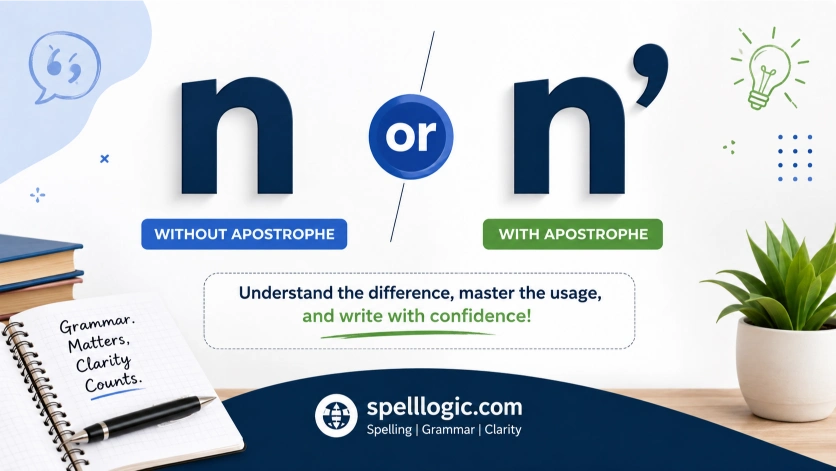
English learners sometimes become confused when they see the letter n and the form n’ in informal writing. The confusion becomes greater when these forms appear in expressions such as rock ‘n’ roll, where an ...
Read more
in the playground or on the playground: What Is the Difference

English learners often hesitate when choosing between “in” and “on” before the word “playground.” The confusion is understandable because both prepositions can describe a person’s location near a place where children play. However, English uses ...
Read more
business’s or business’: Which Is Correct?
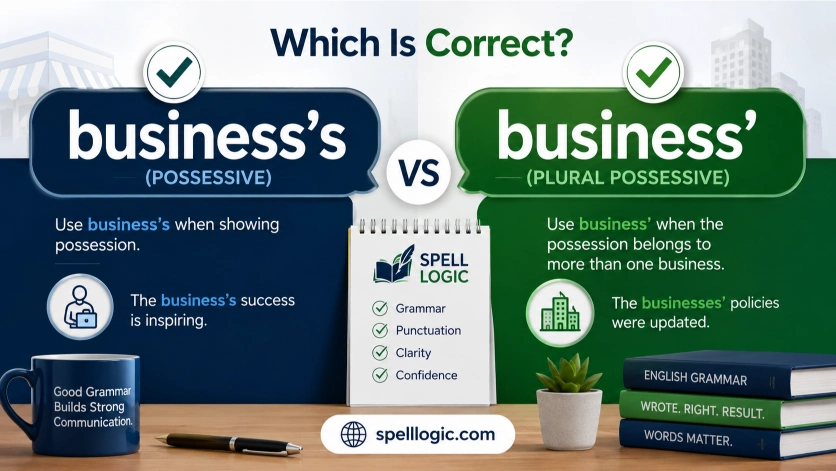
English learners often wonder whether to write business’s or business’ when showing possession. The confusion happens because both forms look possible, and English has different rules for singular and plural possessives. However, the good news ...
Read more