Attornies or Attorneys: What Is the Difference?

If you have ever wondered whether attornies or attorneys is the correct spelling, you are not alone. Many English learners write attornies because words ending in -y often change to -ies when they become plural. ...
Read more
Lifelong or Life-Long: Which Is Correct?

Many English learners wonder whether lifelong or life-long is the correct spelling. The confusion comes from the fact that both forms have appeared in English, and the hyphenated version may still be found in older ...
Read more
Each Has or Have: What Is the Difference?
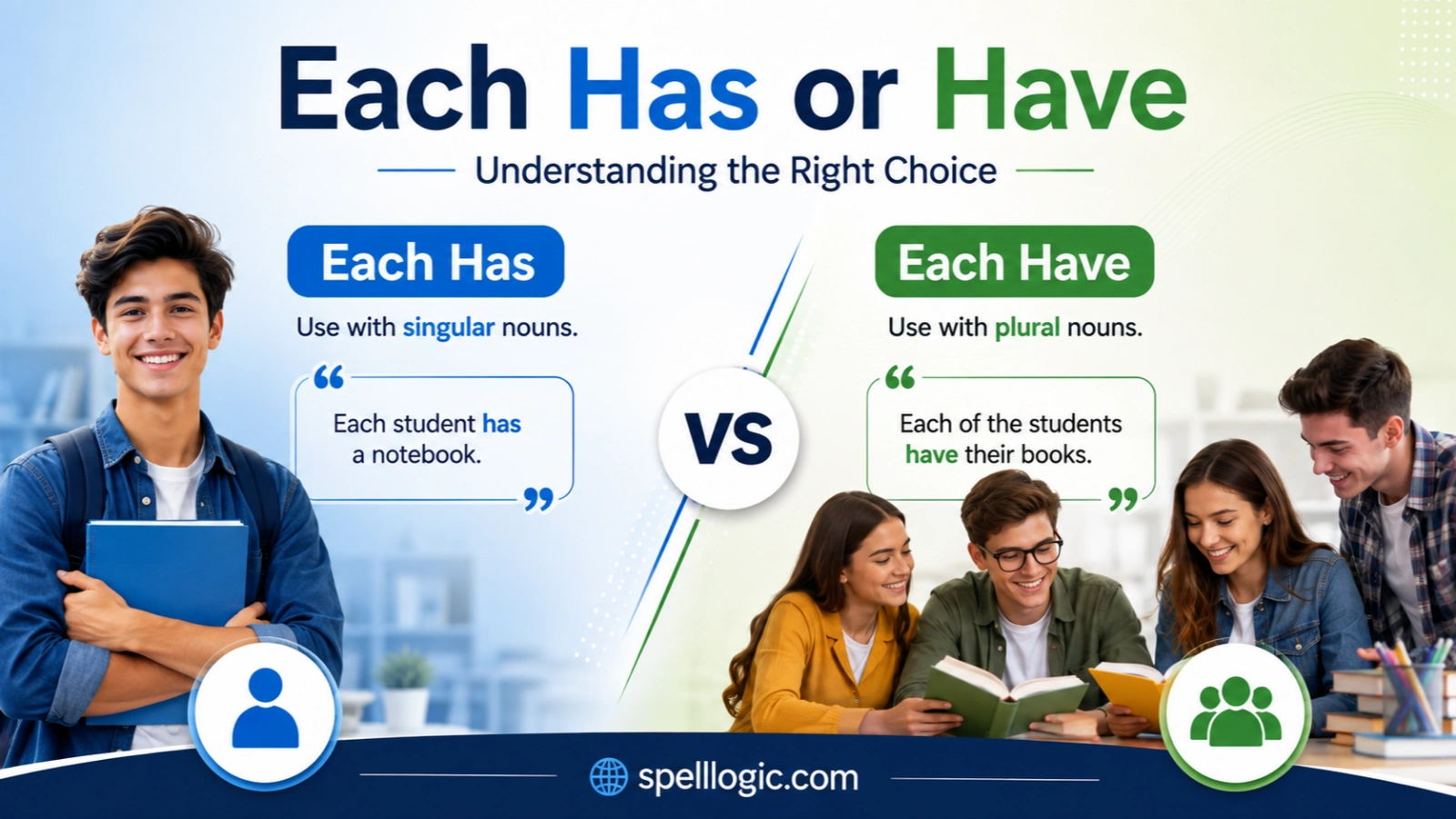
English learners often wonder whether to say “each has” or “each have.” The confusion is understandable because each refers to more than one person or thing, so it can feel natural to use a plural ...
Read more
In Class or In-Class: What Is the Difference ?
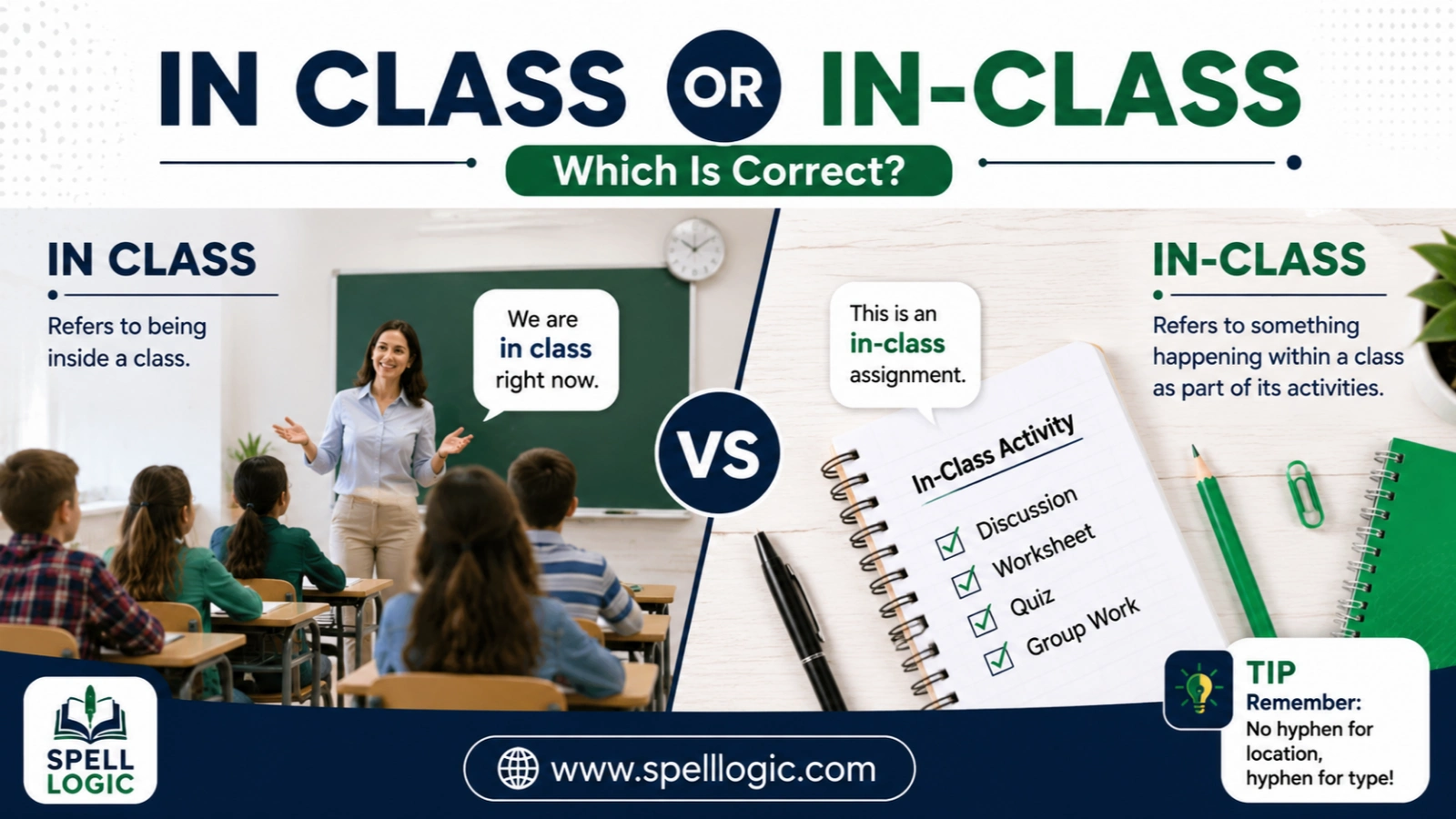
English learners often wonder whether in class or in-class is the correct form because the two expressions look almost identical. The difference is not about pronunciation or meaning alone; it is mainly about grammar and ...
Read more
Dogs or Dog’s: What Is the Difference & Which Is Correct?

English learners often confuse dogs or dog’s because the words look almost identical, but the apostrophe changes the meaning completely. One form is a plural noun, while the other usually shows possession. Knowing when to ...
Read more
Mismatch or Mix Match: What Is the Difference?
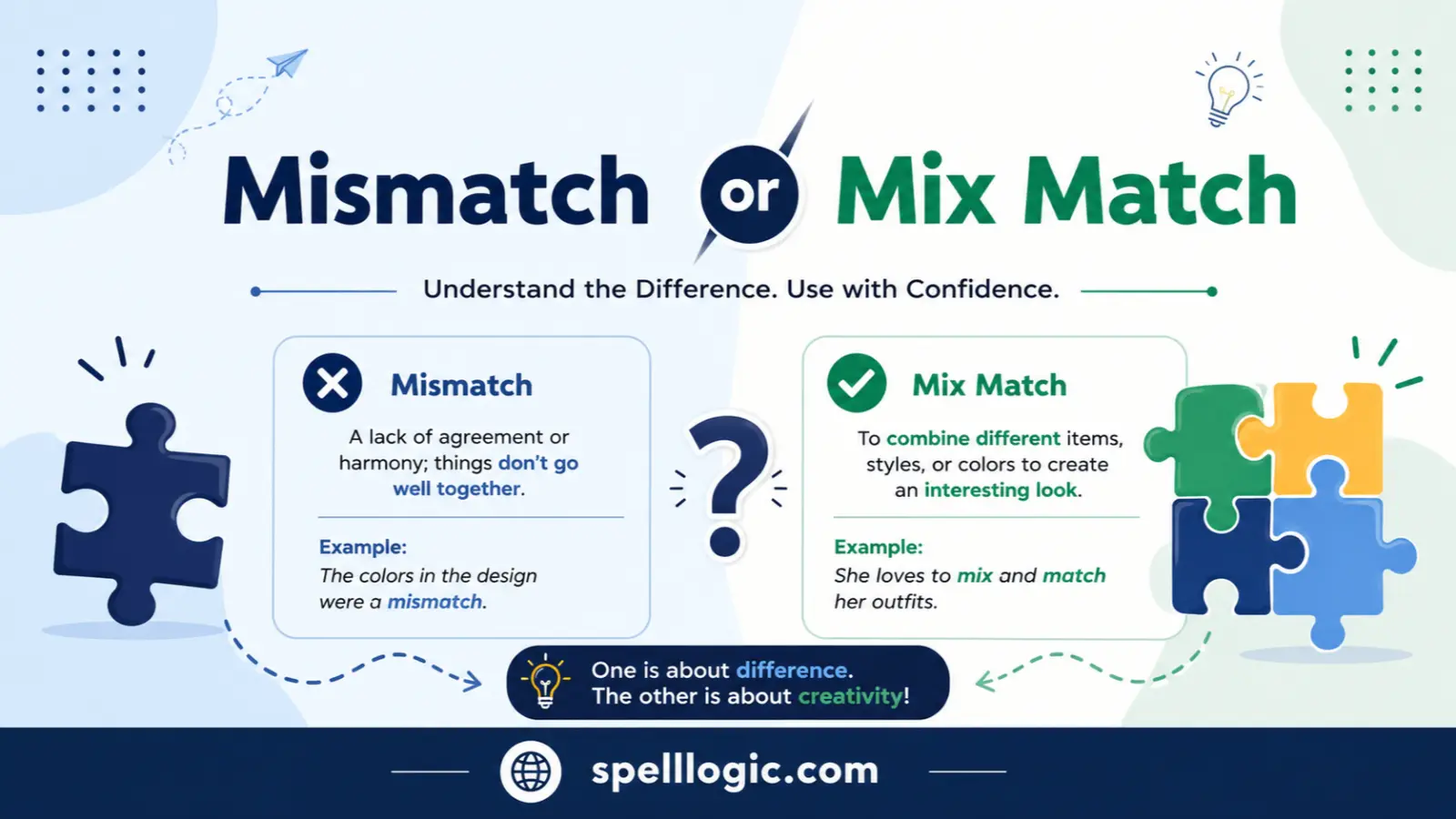
English learners often become confused by mismatch or mix match because the two expressions look and sound closely related. However, they do not function in the same way, and one form is usually written as ...
Read more
In Process or On Process: What Is the Difference ?
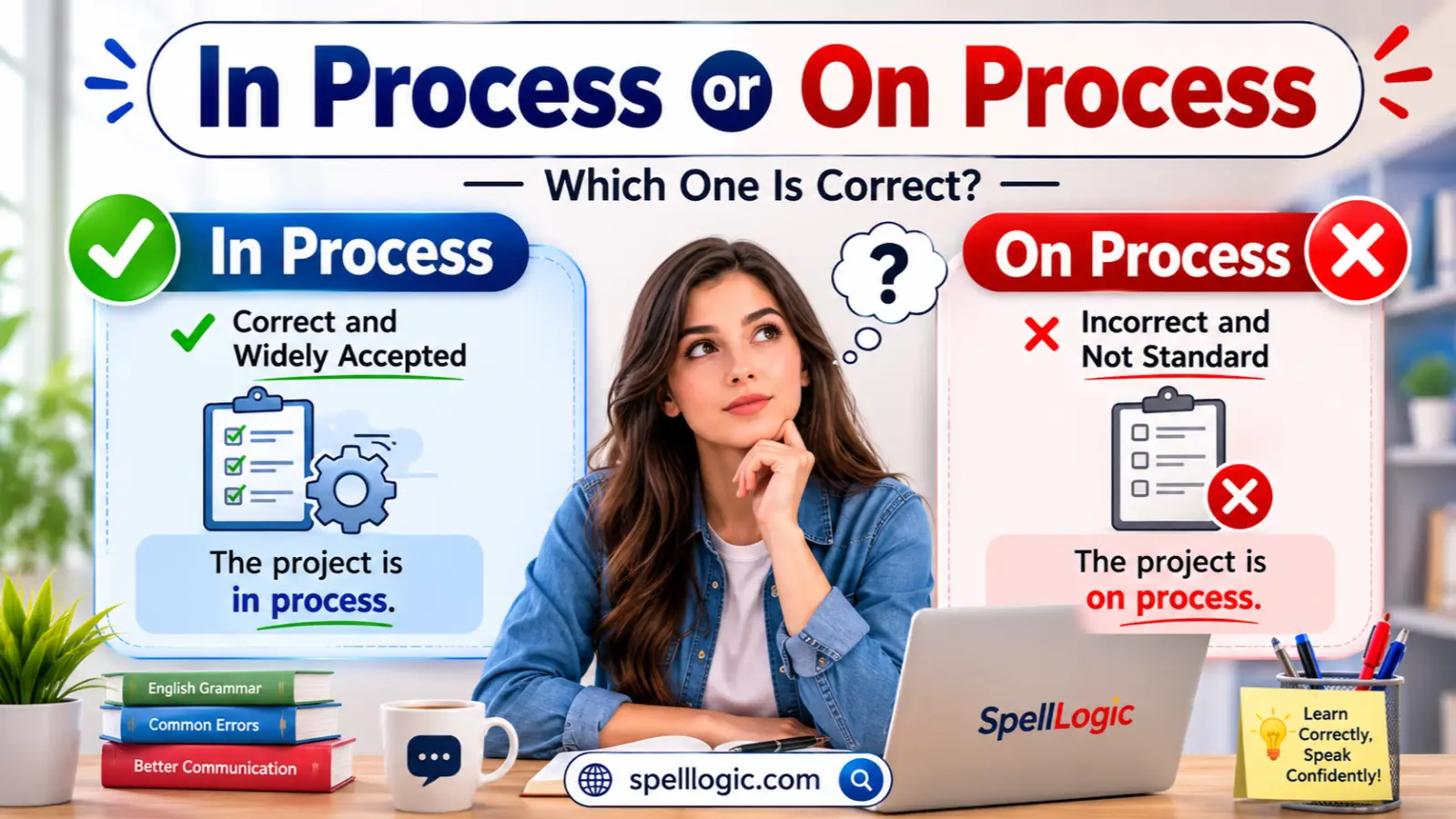
Many English learners feel confused when choosing between “in process” and “on process” because both expressions seem similar and appear to describe something that is happening. However, only one of these phrases is commonly correct ...
Read more
On Monday or in Monday: Which Is Correct?
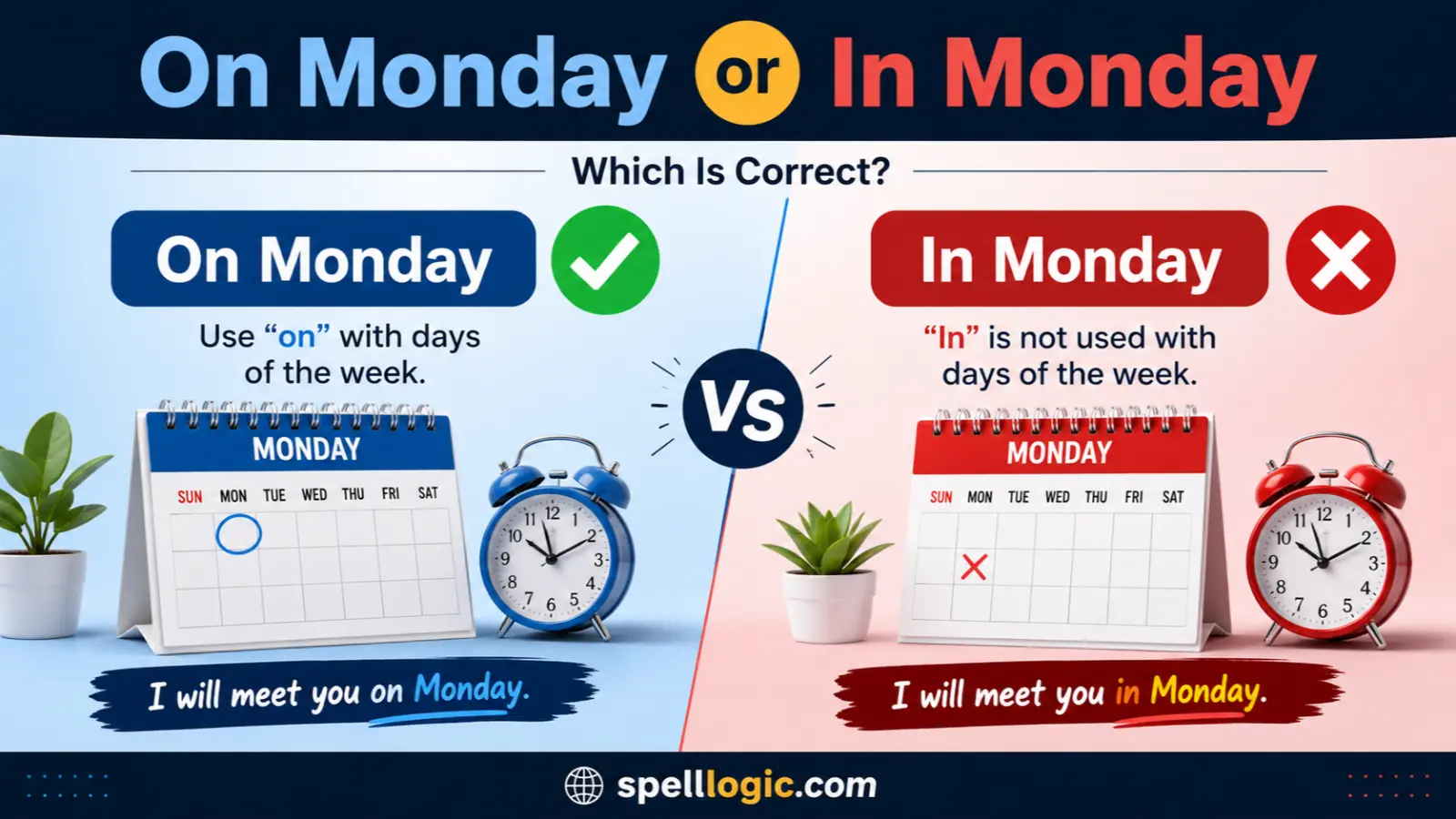
English learners often wonder whether to say on Monday or in Monday when talking about a specific day. Both prepositions, on and in, are common in English, but they are used differently with time expressions. ...
Read more
Any Plural or Singular: Which Is Correct?
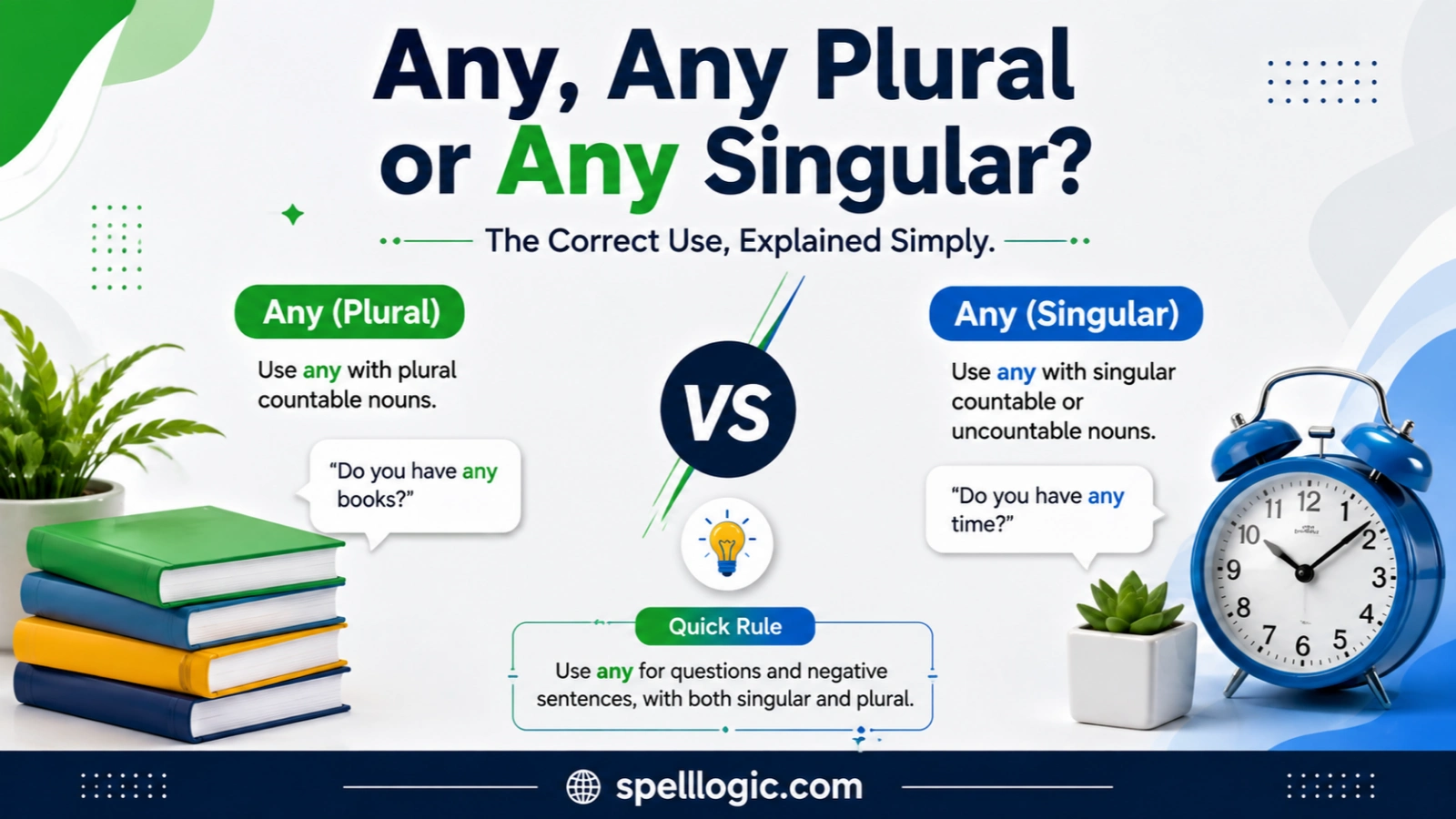
English learners often search for any plural or singular because they wonder whether any is singular or plural. The confusion happens because any can be used with singular countable nouns, plural countable nouns, and uncountable ...
Read more
Off Day or Day Off: Which Is Correct?
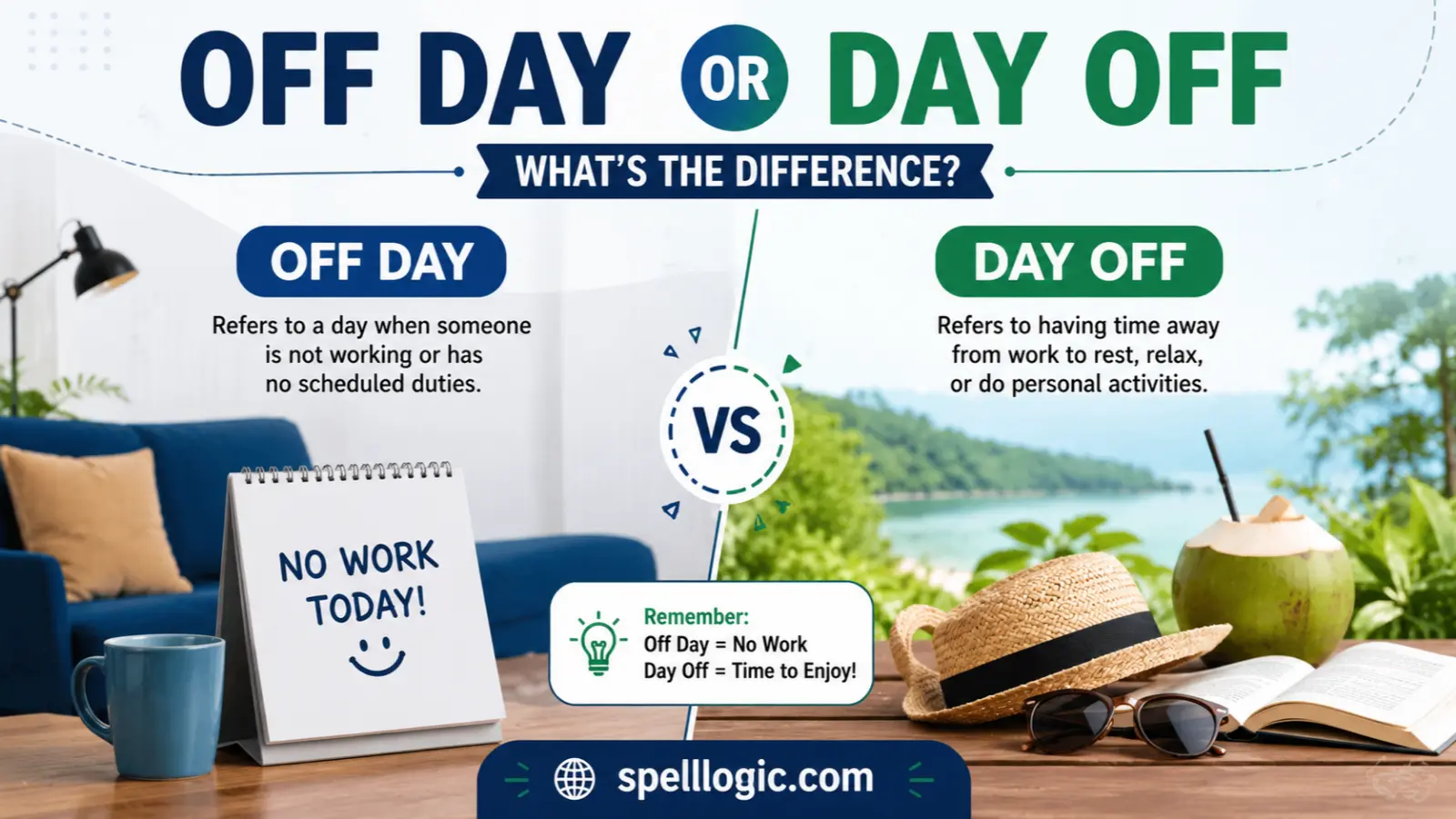
English learners often wonder whether to say “off day” or “day off” when talking about time away from work, school, or regular duties. The confusion is understandable because the expressions contain the same words, but ...
Read more