Request of or for: What Is the Difference & Which Is Correct?
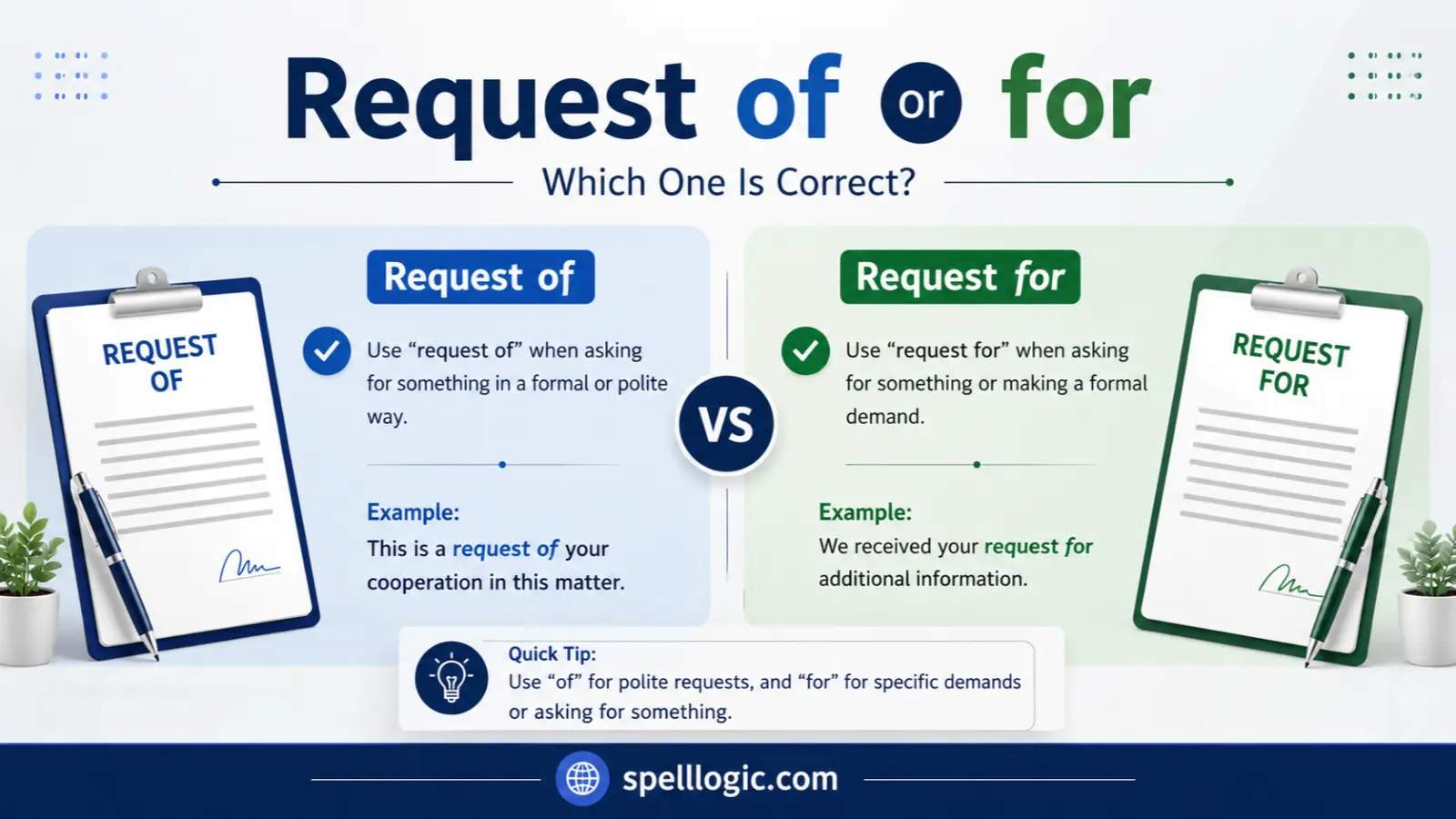
The phrases request of or for can confuse English learners because both use the noun request, yet the preposition that follows can change the meaning and structure of the sentence. In everyday English, request for ...
Read more
Wake Up or Woke Up: Which Is Correct?

English learners often find wake up or woke up confusing because both expressions describe the same basic action: stopping sleep. The important difference is time. One form is used for the present, future, or a ...
Read more
To Funny or Too Funny: Which Is Correct?
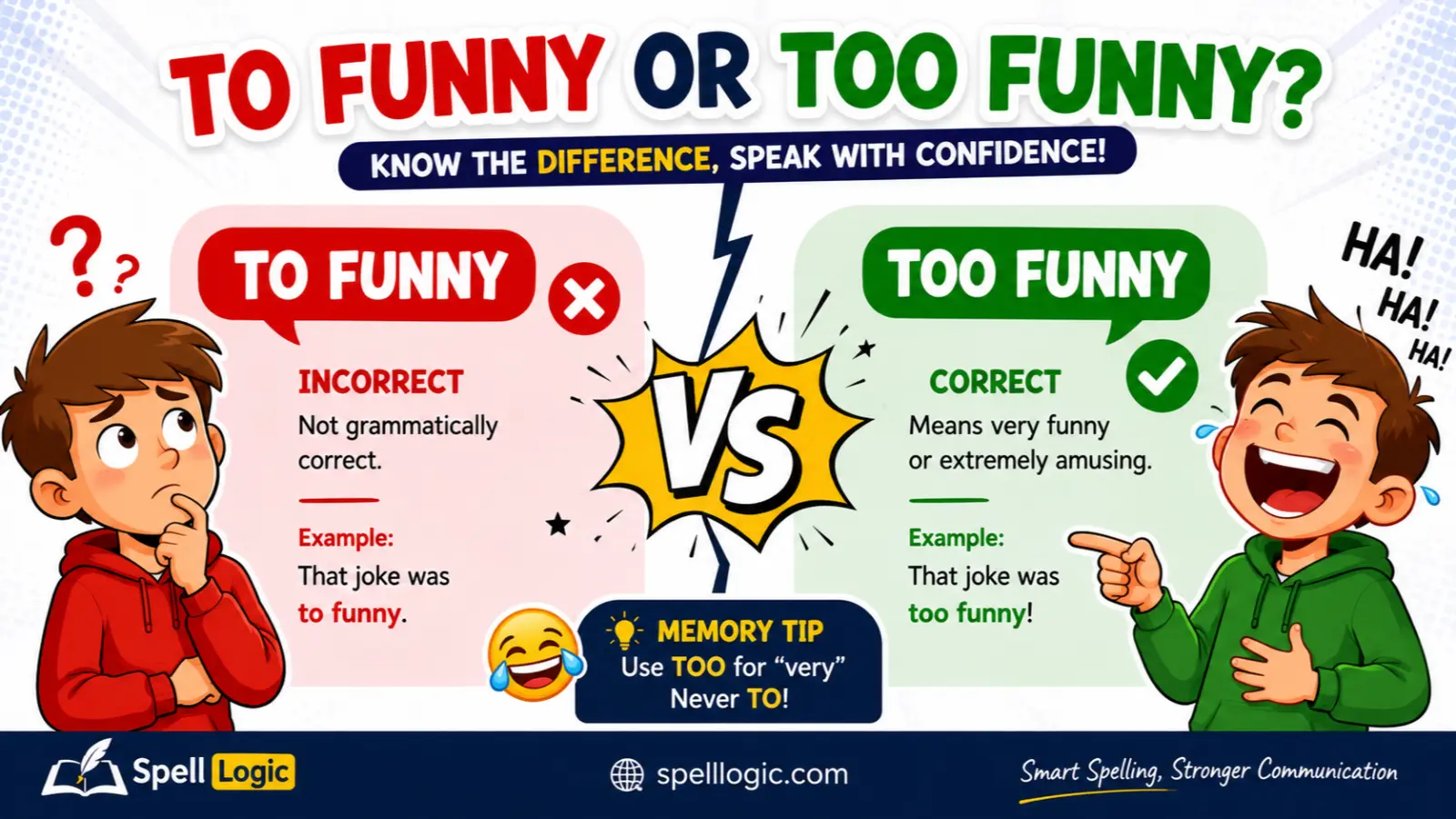
English learners often confuse short words that sound similar or appear in the same sentence. To and too are a common example, and adding funny can make the correct expression harder to identify. The question ...
Read more
In the List or On the List: What Is the Difference ?
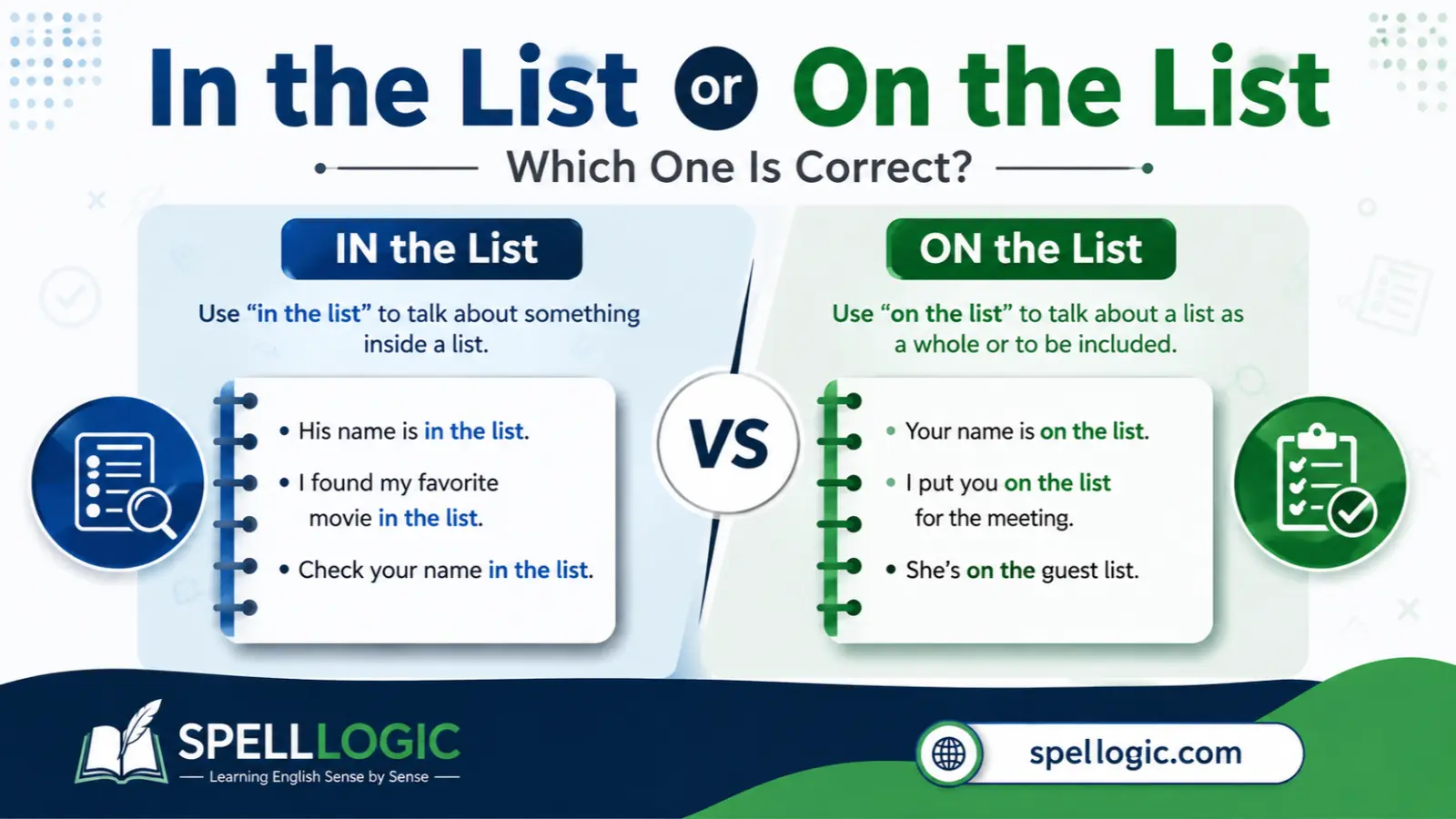
English learners often find prepositions difficult because small words can completely change the meaning of a sentence. The expressions in the list or on the list are a good example. Both are grammatically possible, but ...
Read more
Her husband or His Husband: Which Is Correct?
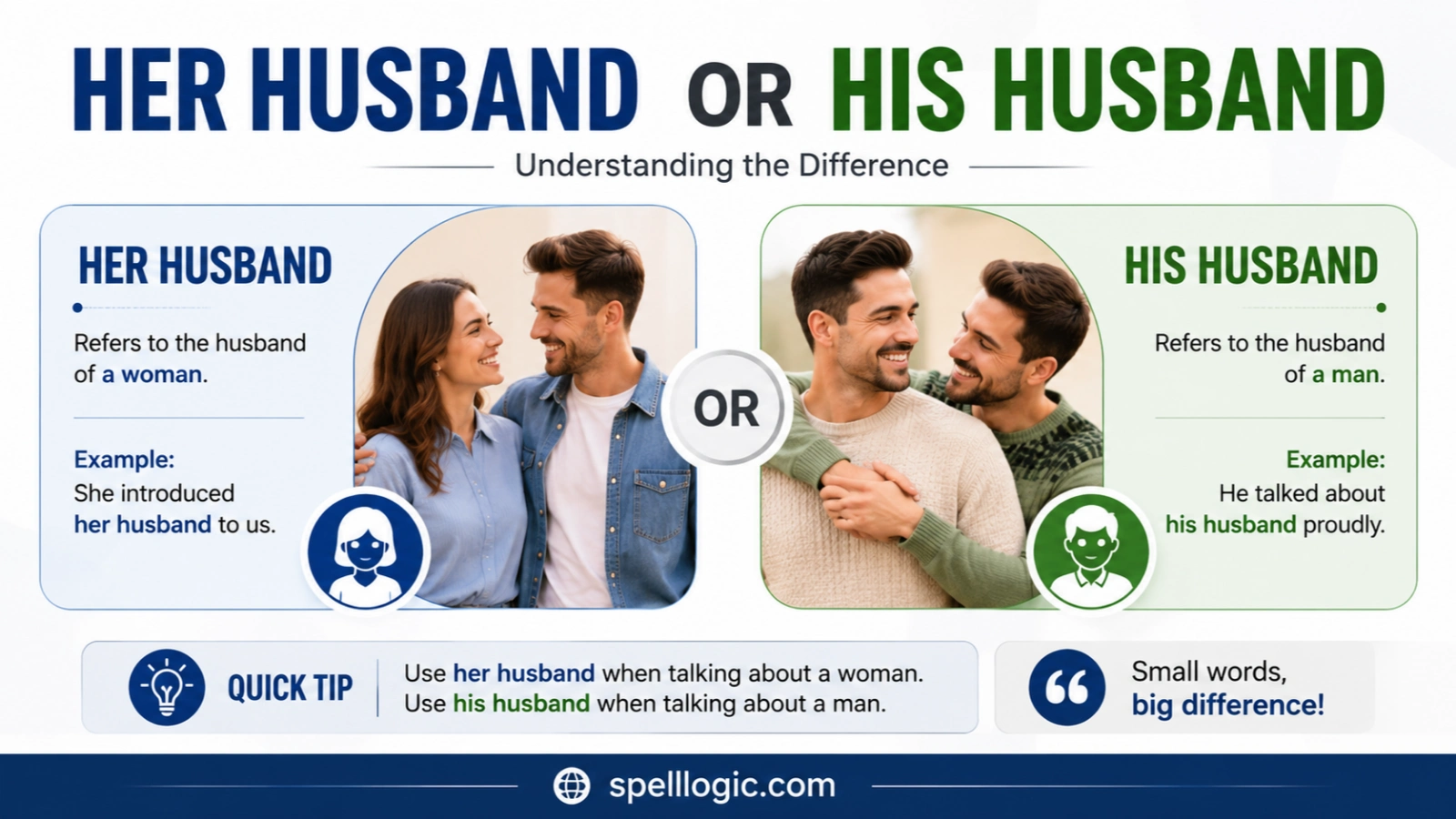
English learners often hesitate when choosing between possessive words such as “her” and “his.” The phrase her husband or his husband can be especially confusing because both forms look grammatically possible at first glance. This ...
Read more
Drunk or Drank: What Is the Difference?
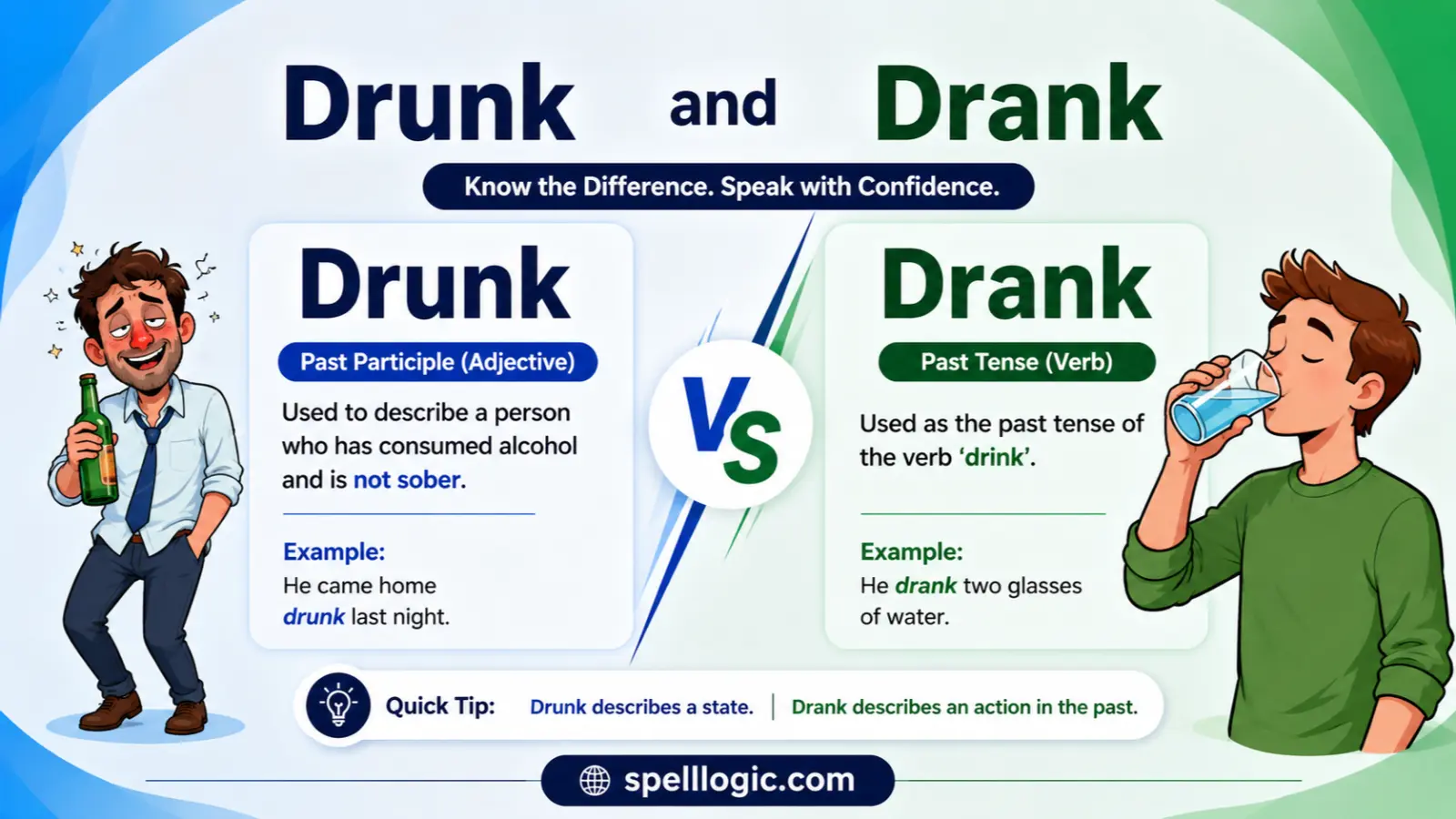
Drunk or drank can be confusing for English learners because both words come from the verb drink, but they have different grammatical functions. The main difference is simple: drank is the simple past tense of ...
Read more
in the park or at the park: Which Is Correct?

English learners often wonder whether to say in the park or at the park. Both expressions are correct, but the small prepositions in and at change the focus: one usually emphasizes an area, while the ...
Read more
In Bus or On Bus: What Is the Difference & Which Is Correct?
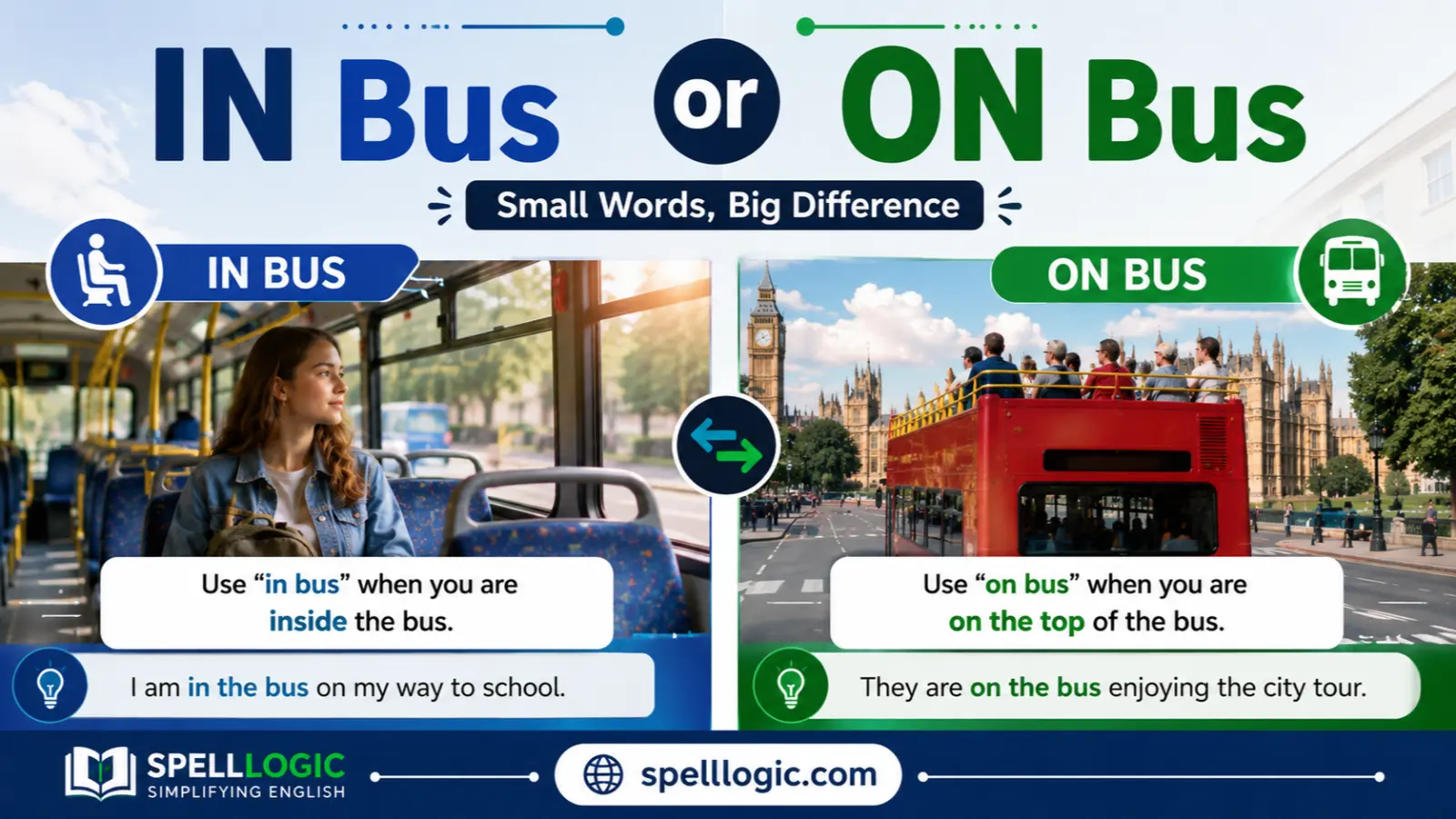
Many English learners wonder whether they should say “in bus” or “on bus.” These two phrases may seem similar, but only one is generally correct in standard English. The confusion often happens because different languages ...
Read more
i am in office or at office: what is Difference?

English learners often wonder whether to say “I am in office” or “I am at office” when talking about their workplace. Both expressions can seem logical because English uses different prepositions for locations. “I am ...
Read more
In the Background or On the Background: What Is the Difference?
Many English learners struggle with the phrases in the background and on the background because both seem related to position and location. Since the words in and on are common prepositions, choosing the correct one ...
Read more